Key Takeaways
- High BP often has no symptoms but silently damages the heart, brain, kidneys and eyes.
- Cutting salt, losing weight and regular exercise can lower BP significantly.
- Lifestyle changes help everyone – but many people still need medicines.
- Never stop BP medicines on your own, even if readings become normal.
- Check BP regularly at home and keep a record for your doctor.
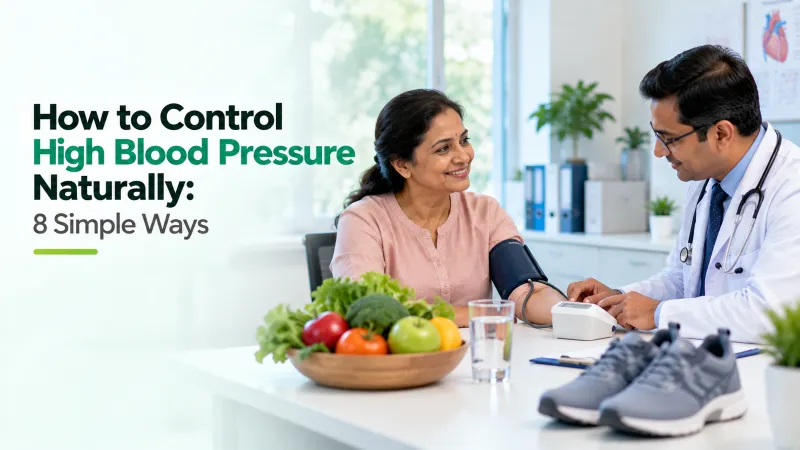
High blood pressure is called the “silent killer” because most people feel perfectly fine – until it causes a stroke, heart attack or kidney damage. The good news is that everyday habits have a powerful effect on blood pressure. Here are eight simple, proven ways to bring it down.
What Counts as High Blood Pressure?
Blood pressure is written as two numbers – for example 120/80 mmHg. The top number (systolic) is the pressure when the heart pumps; the bottom number (diastolic) is the pressure when it relaxes. Readings that stay at 140/90 or higher on repeated checks are generally considered high blood pressure, while readings between 120/80 and 139/89 are a warning sign. Your doctor will set the right target for you.
8 Simple Ways to Lower Blood Pressure
1. Cut Down on Salt
Aim for less than 5 g of salt a day (about one teaspoon) from all sources. Reduce pickles, papad, farsan, namkeen, packaged snacks, sauces and extra salt at the table.
2. Eat More Vegetables, Fruits and Whole Grains
A diet rich in vegetables, fruits, pulses, whole grains and low-fat dairy – similar to the DASH diet – can lower BP noticeably. Potassium-rich foods such as bananas, leafy greens and coconut water help, unless your doctor has restricted potassium for kidney disease.
3. Exercise Regularly
At least 30 minutes of brisk walking, cycling or swimming on most days (about 150 minutes a week) helps lower BP and strengthens the heart.
4. Lose Extra Weight
Even a few kilograms of weight loss, especially around the waist, can bring readings down.
5. Limit Alcohol and Quit Smoking
Alcohol raises BP, and smoking and tobacco damage blood vessels and multiply heart and stroke risk.
6. Manage Stress
Regular breathing exercises, yoga, meditation and time for hobbies can help keep stress – and BP spikes – under control.
7. Sleep Well
Aim for 7–8 hours of good-quality sleep. Loud snoring with pauses in breathing may be sleep apnea, a common hidden cause of high BP.
8. Monitor Your BP at Home
A validated digital BP machine lets you track readings. Sit quietly for 5 minutes, keep the arm at heart level and record readings to show your doctor.
When Are Medicines Needed?
Lifestyle changes help everyone, but many people still need medicines – especially if BP is very high, or they have diabetes, kidney disease, heart disease or a previous stroke. Modern BP medicines are safe and effective when taken as prescribed.
Never stop BP medicines on your own. Normal readings usually mean the medicine is working. Stopping suddenly can cause a dangerous rise in BP.
Warning Signs of a BP Emergency
- Severe headache, blurred vision or confusion
- Chest pain or breathlessness
- Weakness of one side of the body or slurred speech (possible stroke)
- Very high readings (for example 180/120 or above) with any symptoms
Read more about high blood pressure treatment.
Why Choose Pluto Hospital, Himatnagar
At Pluto Super Speciality Hospital, long-term conditions are managed by Dr. Charudatt Gor, MBBS, DNB (General Medicine), with an automated lab, 24×7 emergency, ICU support and cashless insurance. We focus on clear advice you can follow at home, regular follow-up and timely referral when needed.
Conclusion
High blood pressure can be controlled. Less salt, a balanced diet, regular exercise, a healthy weight, good sleep and no tobacco can lower BP significantly – and make medicines work better when they are needed. Check your BP regularly, take medicines as prescribed and see your doctor for regular follow-up.
Want to get your BP under control?
Consult Dr. Charudatt Gor at Pluto Hospital, Himatnagar for a personalised BP plan.
Frequently Asked Questions
Can high BP be cured without medicine?
Mild high BP can sometimes be controlled with lifestyle changes alone. Many people still need medicines, and your doctor will decide based on your readings and other conditions.
What is a normal blood pressure?
Around 120/80 mmHg or lower is generally considered normal. Readings that stay at 140/90 or higher are usually considered high. Your doctor will set your target.
Which foods lower blood pressure?
Vegetables, fruits, pulses, whole grains, low-fat dairy and potassium-rich foods help, along with cutting salt and processed foods.
Can I stop BP tablets when my BP becomes normal?
No. Normal readings usually mean the medicine is working. Never stop or change BP medicines without your doctor’s advice.
Does high BP cause symptoms?
Usually not – which is why regular checks are important. Very high BP may cause headache, blurred vision or chest pain and needs urgent care.